




Measure where it’s made.
Large volumes inspected fast.
Hexagon laser trackers offer uninterrupted, high-accuracy large-volume measurement that scales from probing to scanning to automation — so assemblies leave the floor right the first time.
Large parts. Tight tolerances. Zero room for downtime.
You're inspecting bigger assemblies, with tighter tolerances, and a shrinking pool of skilled metrologists. Every line-of-sight break, every tool switch, every reposition is time the schedule can't absorb.
Hexagon Absolute Trackers are designed to keep your workflow moving. One platform handles probing, scanning, and automation across volumes up to 160 m in diameter, keeps measuring through interruptions, and delivers the precision data you need.
Why Hexagon

long-range direct scanning
ATS800 captures features and surfaces in real time up to 40 metres — keeping operators safely on the ground while still hitting reflector-level precision.

less inspection time
Our customer cut crane-boom inspection time by up to 80% with a Hexagon tracker amid dust and vibration, with minimal training.

more inspection throughput
Three multipliers — PowerLock continuity, high-speed scanning, and long-range reach — combine to deliver 20–40% more throughput with the same number of staff.
See them at work
One minute to see what they can do on the floor and on the job.


“In our facilities we have to deal with dust and vibrations… We had our doubts about finding a device that can deal with this environment. The results have been excellent, and all this with minimal training required.”
Philippe Dudzik
Industrial Director
Vlassenroot Group


Learn more
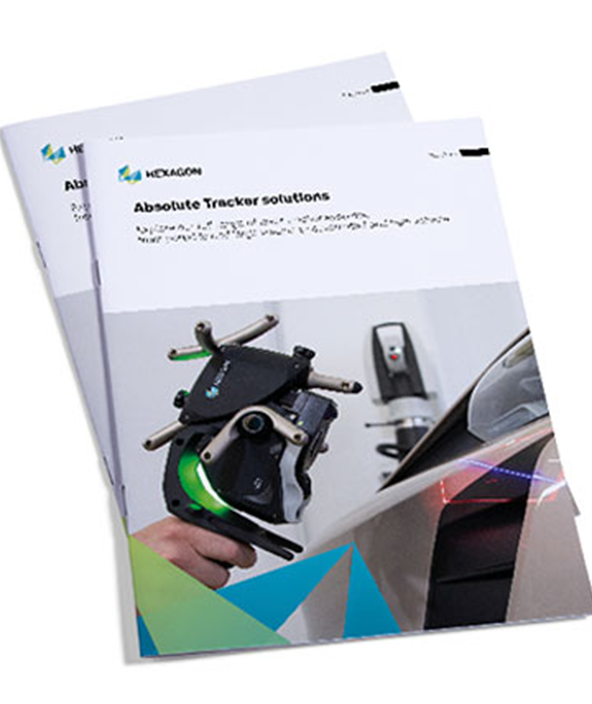
Strategic, technical and on-the-floor reading for buyers, metrologists and automation engineers.



Ready to see one of these in your operation? Book a demo to explore the right tracker setup for your needs